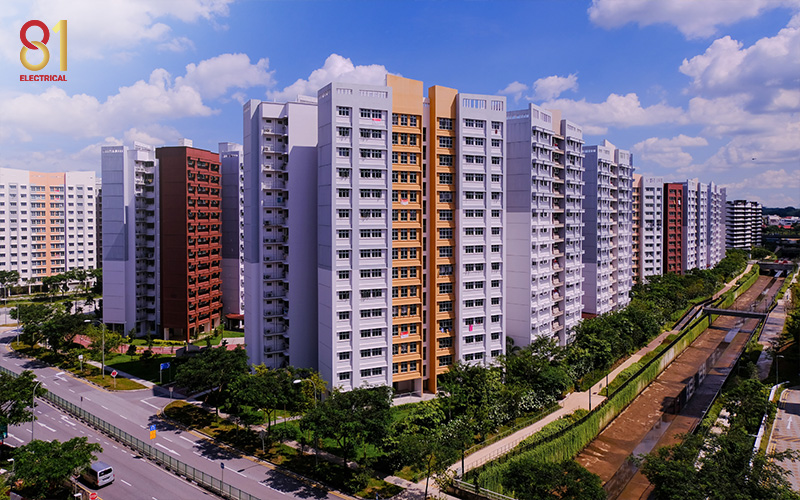
Planning an electrical wiring installation in house settings requires careful consideration of safety, compliance, and long-term functionality—especially within Singapore’s HDB flats.
From selecting suitable cabling types to understanding regulatory requirements, this guide outlines the key steps homeowners should take to ensure a safe and efficient electrical system.
Whether you are renovating, upgrading, or installing new circuits, proper planning helps prevent power trips, overloading, and costly rectifications in the future.
Introduction
Electrical wiring is what allows electricity to flow safely throughout your home, powering everything from lighting and appliances to modern smart devices. While most homeowners only interact with switches and sockets, the wiring behind the walls plays a much bigger role in how stable and reliable your electrical setup is. Without a qualified HDB electrician, it can be difficult to navigate the different types of wires and cables involved in electrical works.
Understanding how to identify common wiring systems and cable types can help you make better decisions when managing power usage, spotting potential issues, or planning future upgrades. It also gives you a clearer picture of how electricity is distributed across different areas of your home.
Key Electrical Components That Support Power Distribution in Homes
A home’s electrical setup consists of several interconnected components that work together to deliver power safely and efficiently. These include wiring, cables, circuit protection systems, and distribution points that regulate how electricity flows.
Being able to recognise these components even at a basic level can help you better understand how your home handles power usage, especially as more appliances and devices are introduced over time.
How to Identify Common Electrical Cable Types and Their Use Cases
Different types of cables are used in homes depending on their purpose, environment, and level of protection required. Knowing how to differentiate them helps you understand where they are typically used, why proper installation matters, and when electrical troubleshooting may require professional electrical inspections and testing to check for faults, wear, or unsafe connections.
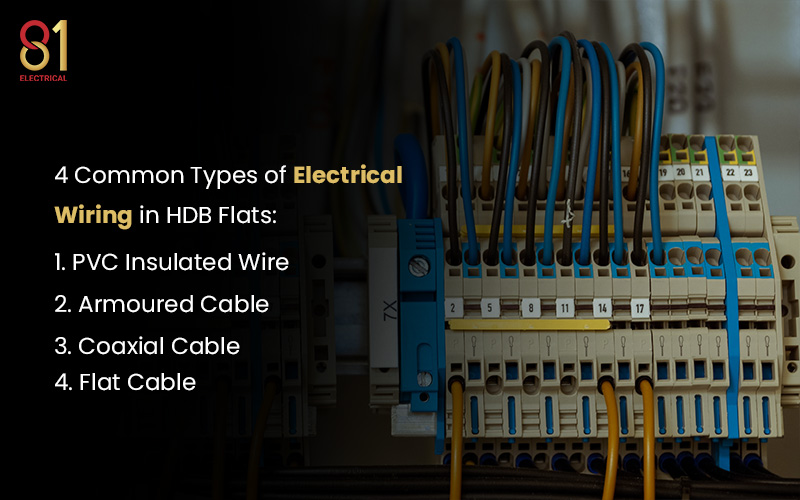
1. PVC Insulated Wire
PVC insulated wires are widely used in residential settings and HDB electrical rewiring due to their flexibility and resistance to moisture.
How to identify:
- Usually coated with coloured plastic insulation
- Lightweight and flexible
- Commonly found within walls or conduits
Use cases:
- General indoor wiring for lighting and power points
- Suitable for standard household electrical needs
2. Armoured Cable
Armoured cables are designed with an extra protective layer to withstand physical impact and environmental exposure.
How to identify:
- Thicker outer layer, often metallic or reinforced
- More rigid compared to standard wires
Use cases:
- Areas exposed to potential damage
- External or heavy-duty applications
3. Coaxial Cable
Coaxial cables are primarily used for signal transmission rather than power.
How to identify:
- Round cable with a central conductor and outer shielding
- Typically used for TV or internet connections
Use cases:
- Television signal transmission
- Broadband and communication systems
4. Flat Cable
Flat cables are designed for compact installations where space is limited.
How to identify:
- Thin, flat shape instead of round
- Often used in tight or concealed spaces
Use cases:
- Space-constrained areas
- Specific appliance or connection setups
How to Differentiate Wiring Systems Based on Layout and Installation
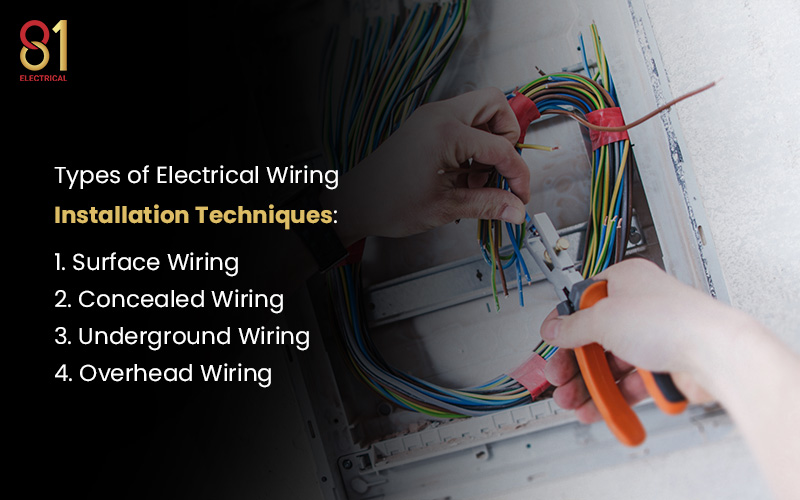
Beyond cable types, wiring systems can also be identified based on how they are arranged throughout the home. This affects both accessibility and how power is distributed. A reliable electrician in Singapore will always give you a proper assessment on suitability, safety considerations, and regulatory compliance before proceeding with any type of installation.
1. Surface Wiring
Wiring is installed along walls or ceilings and remains visible.
How to identify:
- Cables enclosed in casing or conduits on the surface
- Easily accessible for inspection
Use cases:
- Quick modifications or adjustments
- Areas where concealed wiring is not practical
- Adding lighting features such as track lights, where surface wiring can support efficient track light installation without major structural changes.
2. Concealed Wiring
Wiring is embedded within walls, ceilings, or floors.
How to identify:
- Not visible externally
- Power points and switches appear flush with walls
Use cases:
- Modern home designs
- Cleaner aesthetics with minimal visible wiring
- Wall light installation with neater embedded wiring
3. Underground Wiring
Cables are routed below ground level.
How to identify:
- Not visible above ground
- Typically connected to external infrastructure
Use cases:
- Outdoor or structural routing
- Protected cable runs
4. Overhead Wiring
Wiring is installed along walls or ceilings and remains visible.
How to identify:
- Cables enclosed in casing or conduits on the surface
- Easily accessible for inspection
Use cases:
- Quick modifications or adjustments
- Areas where concealed wiring is not practical
How Wiring Systems Influence Power Usage and Load Planning
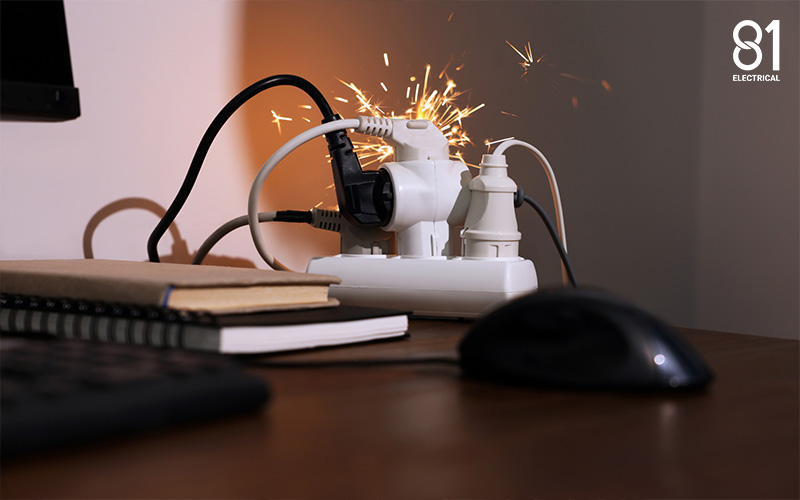
Your wiring layout affects how electricity is distributed across different rooms and appliances. When several high-usage points are concentrated in one area, the load may become uneven, especially in kitchens, laundry areas, or entertainment setups. Understanding your daily appliance habits helps with load planning for your home, so the system can support practical use without overloading specific circuits.
When Wiring Systems May Need Review or Adjustment
Wiring systems may need review when electrical issues become frequent, visible, or linked to higher power use at home. In these situations, arranging a professional home wiring service can help identify whether repairs, upgrades, or safer load arrangements are needed.
Frequent Tripping of Circuit Breakers
Circuit breakers may trip when a circuit is overloaded, faulty, or unable to support current usage safely. If this happens often, the wiring layout should be checked before the issue worsens.
Dimming or Flickering Lights
Lights that dim or flicker may point to loose wiring, unstable connections, or load changes when appliances are switched on. This should be reviewed if it happens repeatedly.
Issues Happen After Adding More Appliances to the Household
New appliances can increase demand on existing circuits. If problems appear after adding more devices, the setup may need better load distribution, especially in older HDB flats.
Visibly Damaged or Frayed Wires
Exposed, cracked, or frayed wires should not be ignored. They can increase the risk of electric shock, overheating, or short circuits, and should be assessed by a qualified electrician.
Overheating Electrical Switches or Plugs
Switches or plugs that feel unusually warm may indicate poor contact, loose wiring, or excessive load. A HDB certified electrician can inspect the cause and advise on the safest next step.
Visible Smoke or Scorch Marks Around Appliances and Cables
Smoke, burning smells, or scorch marks are serious warning signs. Whether the issue comes from wear over time, added appliances, or an earlier electrical installation completed during the building and construction stage, the affected area should be checked promptly before further use.
Understanding Safety and Regulatory Considerations for Wiring and Cables
In Singapore, residential wiring and cable works must follow the relevant safety requirements, especially when they affect electrical loading, power points, or high-capacity appliances. Certain works may require a permit before they can be carried out, while others must still comply with proper installation guidelines to reduce the risk of overloading, unsafe connections, or future electrical faults.
Before making changes to wiring systems, homeowners should check whether approval is needed and engage a licensed electrical contractor where required. This is especially important for works involving new 15-amp power points, air-conditioner points, or electrical installations that may affect the home’s approved load. Proper compliance helps ensure that cables, circuits, and connected appliances are installed safely and legally.
For wiring and cable-related works in HDB flats, homeowners should refer to HDB’s guidelines for electrical work in flats before making changes. These guidelines help clarify what is allowed, what requires approval, and how electrical works should be carried out safely.
As a general rule, wiring should not be embedded within reinforced concrete elements such as slabs, beams, columns, or structural walls. Any new wiring, power points, isolators, or cable adjustments should also be installed and tested properly to ensure the system remains safe, compliant, and suitable for the flat’s approved electrical loading.
Conclusion
Being able to identify common electrical wiring systems and cable types gives homeowners a clearer understanding of how electricity is distributed throughout their home.
From recognising the differences between cable types to understanding how wiring layouts affect power flow, these elements all play a role in supporting safe and efficient power usage. When wiring systems are properly structured and suited to their use cases, they help reduce strain on the overall setup and improve day-to-day reliability.
This is where load planning becomes especially relevant. By understanding how power is distributed across different areas, and how various appliances contribute to overall demand, homeowners can better manage usage and avoid common issues such as overloading or uneven performance.
As homes continue to evolve with more appliances and smart technologies, having this foundational understanding makes it easier to adapt without unnecessary disruptions. It also allows for more informed decisions when reviewing or adjusting existing setups.
At 81 Electrical, our domestic electrical services support homeowners in understanding how their wiring systems and power usage work together, helping them maintain safer and more reliable home environments over time.